Choosing tiles for a terrace on the Costa del Sol: a guide to outdoor porcelain
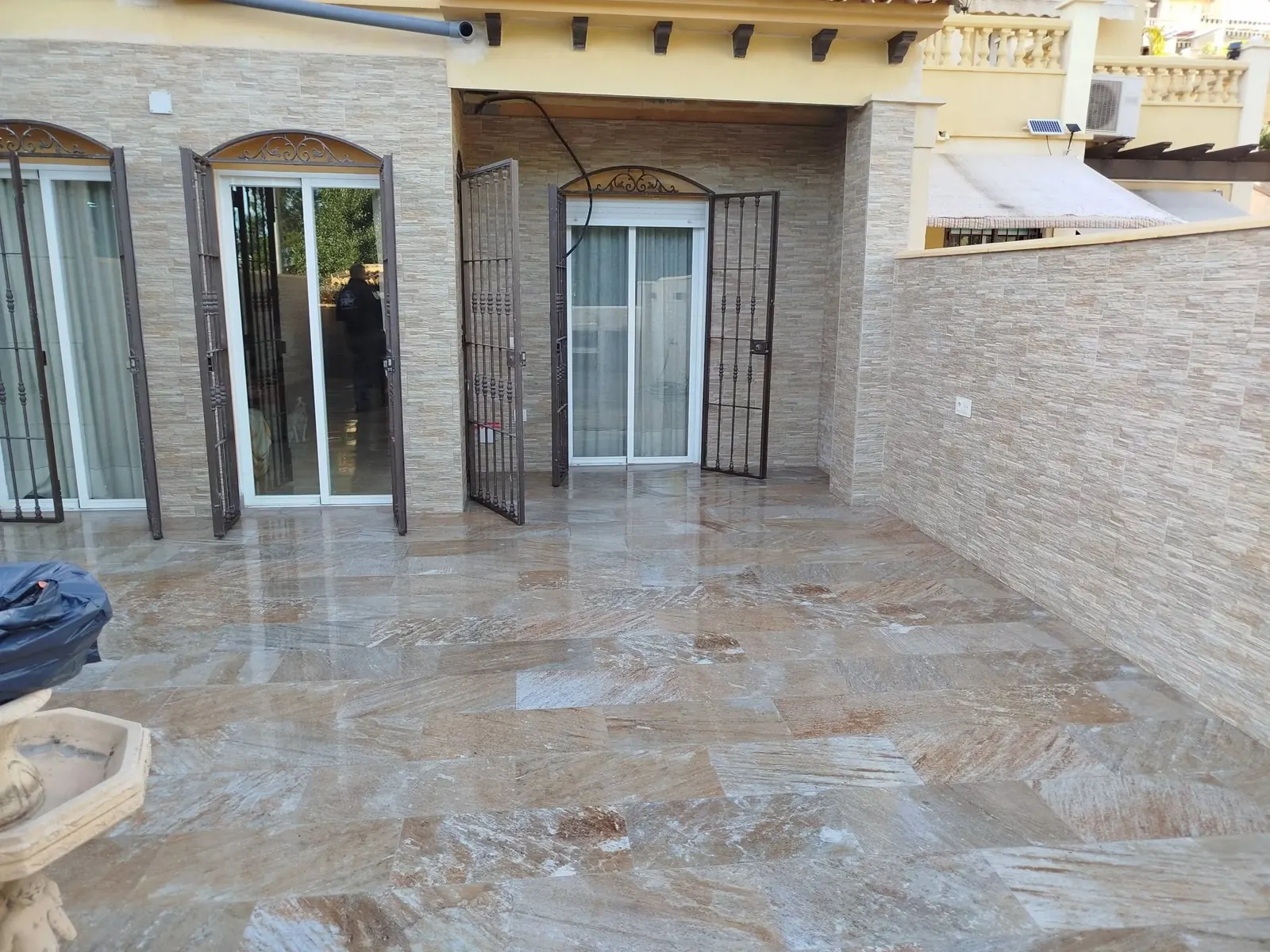
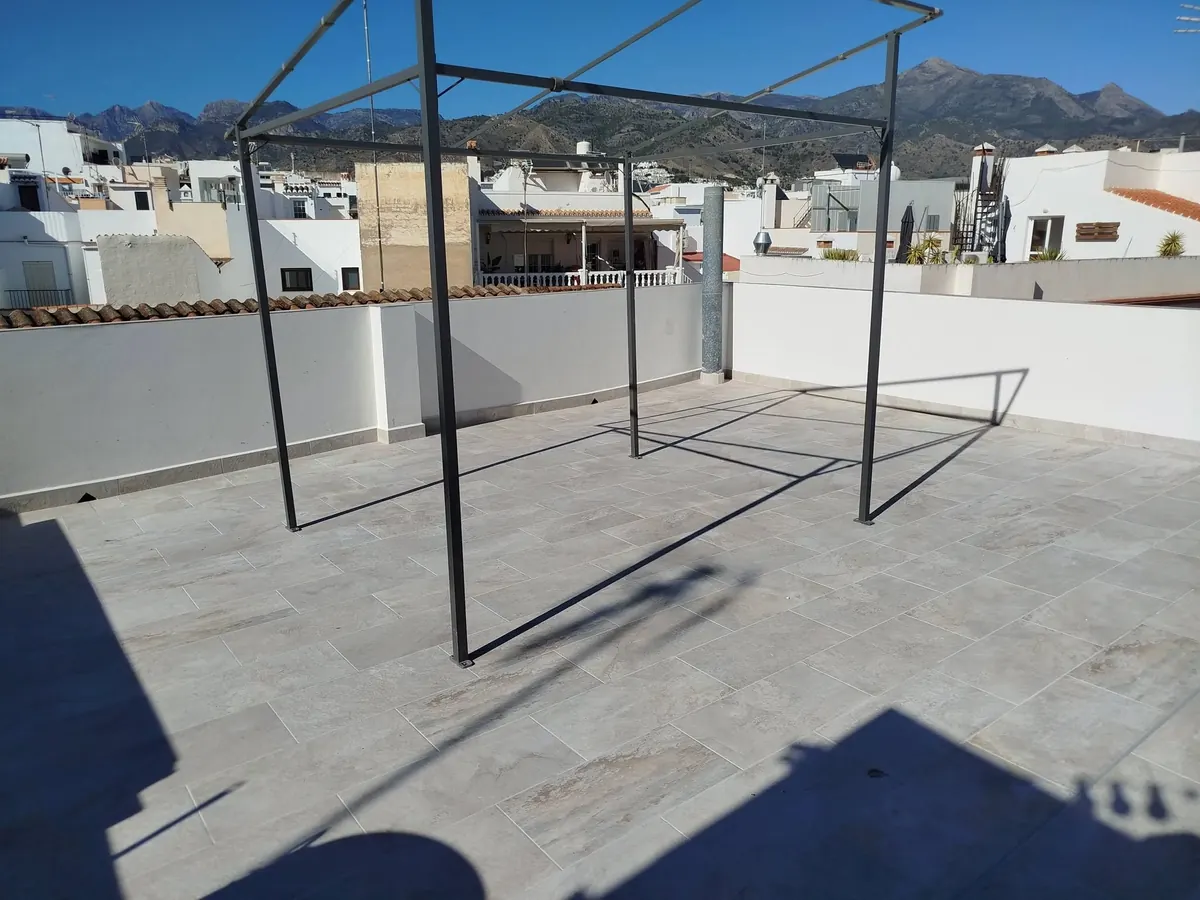
Choosing a terrace floor feels like a style decision, but on the coast it is mostly a technical one. Strong sun, humidity, salt air and temperature swings punish every material. This is what we recommend after many terraces, patios and roof terraces in Nerja.
Why porcelain
Porcelain tiles absorb very little water, resist stains and cope well with the sun, which is why they are now the most used outdoor material in Spain. Finishes imitate natural stone, marble or wood, so they suit a classic Andalusian house as well as a modern villa.
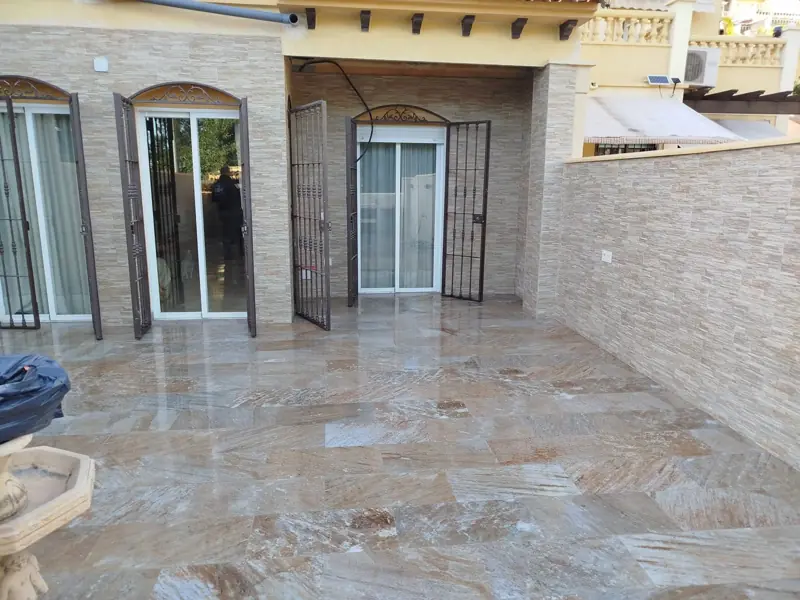
Slip resistance matters most
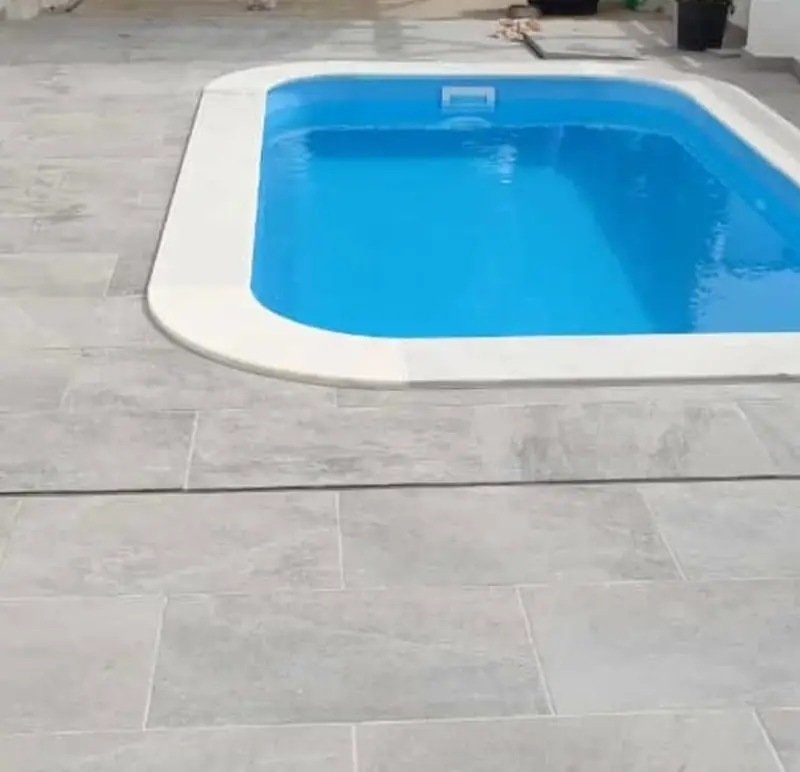
A terrace gets wet: rain, the pool, watering plants. Always ask for an anti-slip porcelain tile rated for outdoor use. In Spain tiles are graded into classes by slip resistance, and for wet outdoor areas such as a pool surround the highest class is recommended. A polished indoor tile on a terrace is an accident waiting to happen.
Size and colour
- Large tiles make a space feel bigger with fewer joints, but need a very flat base.
- Light colours stay cooler in the sun, which you will appreciate barefoot in August.
- Wood-look tiles feel warm on roof terraces and balconies, without the upkeep of real wood.
How they are laid matters as much as the tile
- A slope towards the drains, so no water sits on the surface.
- Outdoor-grade tile adhesive, applied to both surfaces on large tiles.
- Movement joints, because outdoor floors expand and contract with the heat.
- Levelling clips so tiles sit flat with no lips between them.
Can new tiles go over the old ones?
Sometimes, if the existing floor is firmly bonded and there is no damp. If there are leaks below, the terrace needs waterproofing first. We check this at the visit.
Thinking about a new terrace or patio floor? Send us photos on WhatsApp and we will advise you.
Planning a renovation?
Send us photos on WhatsApp and we will tell you what is possible.
Message us on WhatsApp